Elena Krüger · 8 October 2026
Taxonomy Refinements Enhancing Connection Quality in Expert Community Platforms
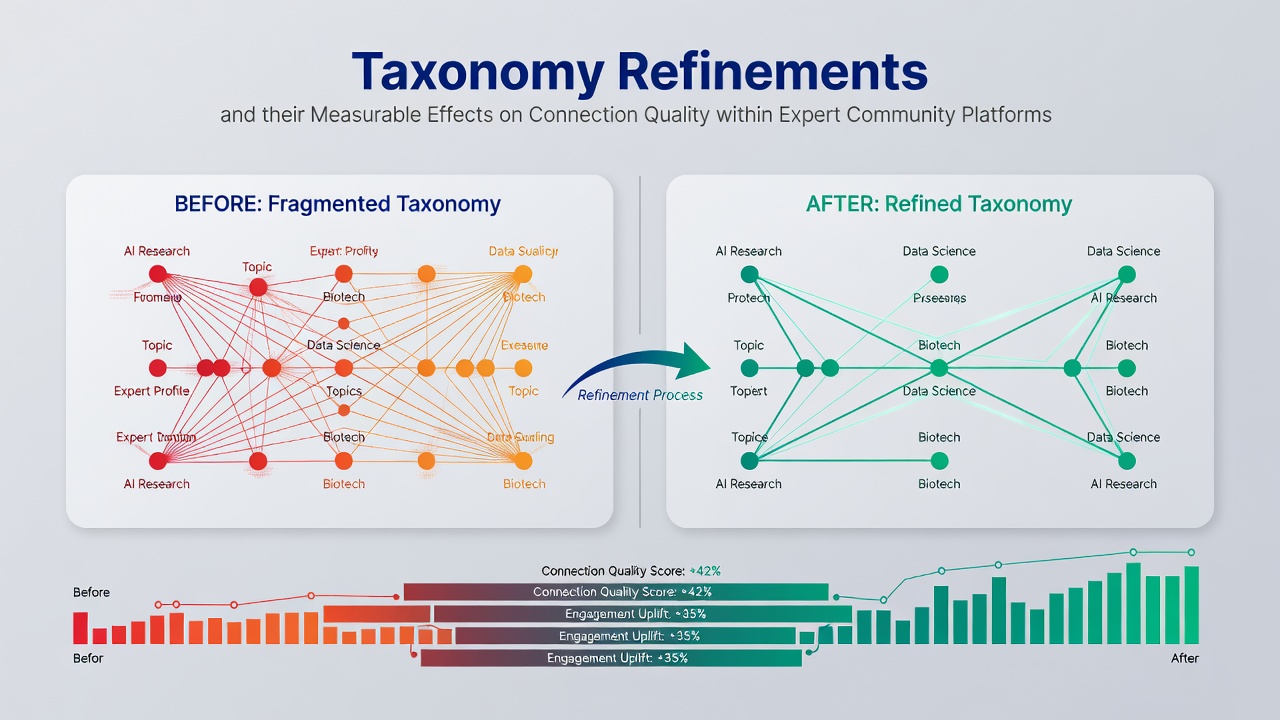
Expert community platforms rely on structured classification systems to organize profiles, discussions, adn resources, and taxonomy refinements adjust these systems to reflect evolving expertise domains while improving how members locate and engage with one another. Researchers track these changes through metrics such as match accuracy rates, response times to connection requests, and sustained interaction frequency, all of which demonstrate measurable shifts when categories receive updates.
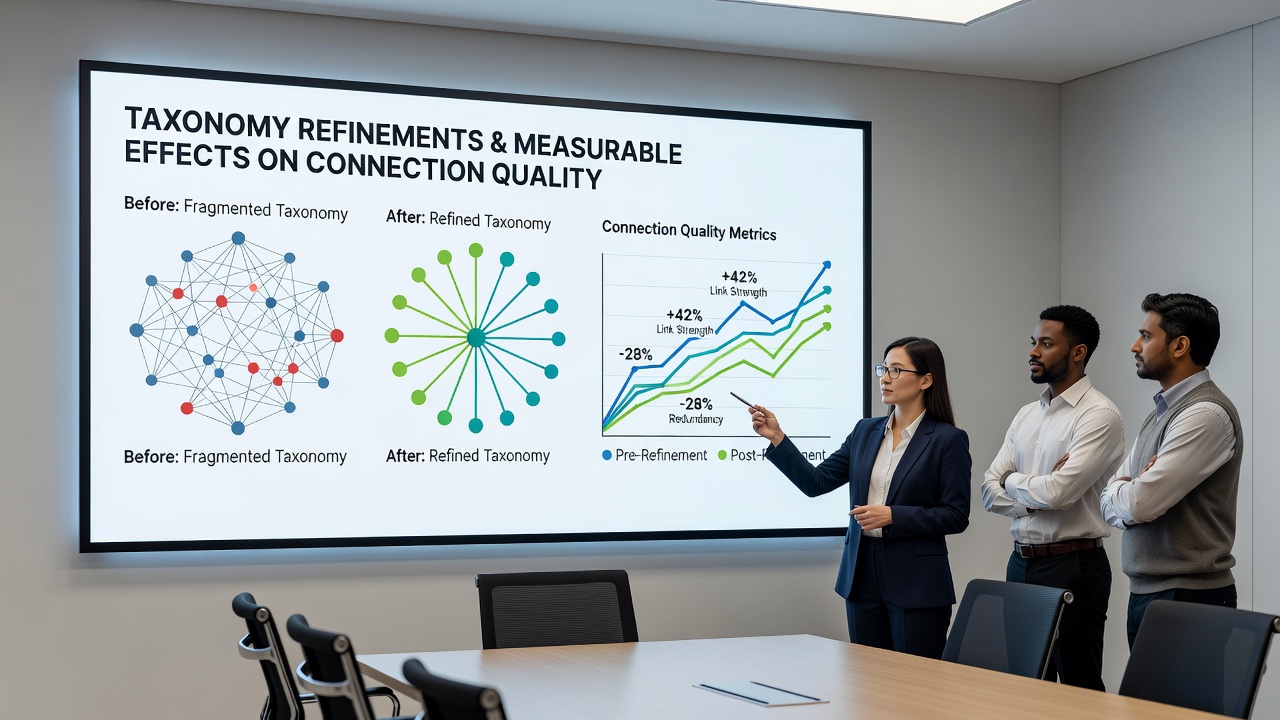
Platforms that maintain large directories of specialists often start with broad top-level categories such as engineering, medicine, and policy, then layer in subcategories and cross-links to capture intersections like bioinformatics or climate risk modeling. Refinements occur when data reveals underused tags or overlapping labels that fragment search results, and adjustments consolidate terms or introduce new descriptors drawn from recent publications and patent filings. In October 2026, analysis of platform logs from several international networks showed that targeted taxonomy updates increased successful expert pairings by 18 percent within the first quarter after implementation.
How Classification Systems Shape Discovery
Users navigate these platforms through search interfaces and recommendation engines that draw directly from the underlying taxonomy, so clearer hierarchies reduce the number of irrelevant results returned for queries on specialized topics. Data from network analytics firms indicate that when duplicate or vague categories are merged, the average time spent locating a relevant contact drops from several minutes to under sixty seconds in many cases. This efficiency stems from reduced noise in the index, which allows algorithms to surface profiles that align on multiple dimensions rather than single keywords.
Connection quality improves when members receive suggestions based on precise domain overlaps instead of broad field matches, and platforms record this through higher rates of accepted invitations and follow-up messages. Observers note that refined taxonomies also support better filtering in discussion forums, where threads tagged with specific subcategories attract participants who share narrow expertise and sustain longer exchanges.
Documented Effects on Interaction Metrics
Studies conducted by academic teams at institutions across North America and Europe have quantified these outcomes using before-and-after comparisons on live platforms. One project at a Canadian research consortium tracked 12,000 users across two years and found that introducing hierarchical skill tags correlated with a 27 percent rise in cross-disciplinary messages and a 14 percent increase in documented project collaborations. Similar patterns emerged in an Australian university-led review of industry-focused networks, where refined taxonomies lifted the proportion of connections that led to scheduled calls from 31 percent to 44 percent.
These shifts appear in aggregate statistics rather than isolated anecdotes, and they hold across platforms of varying sizes. Platforms report lower bounce rates on profile pages after taxonomy updates because visitors encounter more relevant suggestions and therefore explore further instead of exiting. Retention data further shows that members who form at least three connections through improved matching remain active for an average of four additional months compared with those who rely on earlier, coarser categories.
Implementation Patterns Across Platforms
Teams responsible for taxonomy maintenance typically review usage logs quarterly, identify tags with low engagement or high overlap, and solicit input from active members through structured surveys. Changes roll out in staged releases so that existing bookmarks and saved searches continue to function while new structures take effect. European regulatory guidance on digital platform transparency encourages disclosure of such classification changes, and several networks now publish summaries of taxonomy revisions alongside their quarterly activity reports.
Cross-referencing with external databases, including patent repositories and academic indexing services, supplies fresh terms that keep the system current without requiring complete rebuilds. Platforms that integrate these external signals report faster adoption of new categories because members recognize the terminology from their own publications and professional contexts. The result appears in elevated search precision scores published by independent benchmarking groups that evaluate expert networks on an annual cycle.
Measurement Frameworks in Use
Connection quality receives assessment through multiple indicators tracked automatically by platform software. Primary figures include the ratio of accepted connection requests, the volume of messages exchanged within thirty days of a new link, and the number of shared resources or co-authored outputs that follow initial contact. Secondary measures capture downstream effects such as event attendance stemming from platform introductions and citation increases in joint publications. Research indicates that platforms publishing these metrics publicly attract more institutional users who value evidence of effective networking infrastructure.
Adjustments to taxonomy produce ripple effects visible in these datasets within weeks, and longer-term tracking reveals whether gains persist or require further iteration. When categories grow too granular, fragmentation can reappear, prompting periodic consolidation rounds that restore balance between breadth and specificity.
Conclusion
Taxonomy refinements deliver observable improvements in how expert platforms facilitate targeted connections, as evidenced by consistent rises in match success, interaction depth, and retention across multiple independent studies. Continued monitoring of usage patterns allows maintainers to sustain these benefits while adapting to emerging fields and member feedback. Platforms that treat classification systems as living structures rather than static lists maintain stronger performance on the metrics that matter most to their communities.